
A 500-person wedding in Canada typically costs $75,000–$175,000 for a single reception - banquet-style venues and catering commonly run $150–$350 per guest all-in - and each additional event like a sangeet or walima adds its own venue and catering line.
Those "average wedding cost" articles are useless at this scale. The Wedding Report estimates the average Canadian wedding at about $29,450 CAD - but that's built on guest lists a fraction of yours. When you're hosting 400, 500, or 600 people, the math is completely different. Large weddings aren't lump sums. They're a multiplication problem: cost per guest, multiplied by guest count, then adding fixed costs and every pre- or post-wedding event on top.
This post breaks down real per-guest and per-event costs for Canada - venue tiers, catering, rentals, and the often-overlooked expense of multi-day celebrations that are standard for many South Asian, Chinese, Nigerian, Italian, and Middle Eastern families. Run the numbers honestly before you book anything.
Why "Average Wedding Cost" Articles Fail for 500+ Guests
Most average wedding cost surveys are built on weddings with 80–150 guests. That's a completely different financial animal from what you're planning.
When you double or triple the guest count, per-guest costs - catering, venue space, rentals - become the dominant driver. Fixed costs like photography still matter, but they stop being the story. A photographer might charge a flat $5,000 whether you have 100 guests or 500. Your catering bill at $250 per head tells a very different story at each scale.
These articles also almost never account for the multi-event structure of many Canadian weddings. A single reception is one thing. Add a sangeet, a mehndi, a walima - each with its own guest list and venue - and you're running a completely different budget. Start with that reality, not with someone else's averages.
One link, every store. Canadian couples love GetJoyBox for wedding registries that actually work. Create your wedding registry →
The Per-Guest Core: Venue, Catering, and Rentals
This is where most of your budget goes. Here's how venue and catering tier out for a 500-person event in Canada, in 2026 CAD:
Community or Cultural Hall - $100–$200 per person. Often the most affordable path, especially if you can bring in your own caterer. Think spaces like the Croatian Cultural Centre in Vancouver or community halls across the GTA.
Banquet Hall - $150–$275 per person. Dedicated event spaces with in-house catering and a more polished baseline. The Grand Victorian in Mississauga or River Rock Casino Resort's banquet facilities in Richmond are good reference points.
Hotel Ballroom - $200–$350+ per person. Premium service, higher catering standards, and usually more décor included. Fairmont properties and upscale convention centres sit here.
These figures typically cover the meal (buffet or plated), basic linens, cutlery, and a dance floor. Vancouver and Toronto run 15–30% above Calgary or Winnipeg on most of these categories. Always ask whether tables, chairs, and linens are bundled or billed separately - that question alone can shift your estimate by thousands.
For 500 guests you'll need roughly 50–60 tables. That means 50–60 centrepieces. Get the itemized breakdown before you sign anything.
Fixed Costs: The Lines That Don't Scale with Guests
Some costs stay flat no matter how many people show up. They're a bigger percentage of a small wedding budget and a smaller slice of yours - but they're still real money.
Photography and videography - experienced teams covering a full day run $3,000–$8,000+ CAD. Flat fee, not per-guest.
Attire - your dress, suit, or traditional outfits range from $1,000–$10,000+ CAD. Unaffected by guest count.
Officiant - typically $300–$800 CAD.
DJ or live band - a DJ runs $800–$2,500 CAD for an evening. A live band easily hits $3,000–$10,000+ depending on size and reputation. Both are flat performance fees.
These don't compound with your guest list. At 500 people, you're actually getting better value per-guest from fixed costs than a couple hosting 100 - which is one of the few genuine advantages of scale.
The Hard Scales: Expenses Tied Directly to Guest Count
These are the line items that grow fastest. Get these wrong and the budget blows out.
Alcohol - for 500 guests, even a modest beverage package adds $50–$100+ per person. That's $25,000–$50,000 before you upgrade a single thing. Many venues let you negotiate package tiers to control this. It's worth the conversation.
Favours - budget $2–$10 per person if you go this route. At 500 guests, that's $1,000–$5,000. Decide whether this is actually a priority at your scale.
Invitations and stationery - custom invitations for 500 guests, with RSVP cards and details inserts, run $1,500–$5,000+. Canadian options like Paper & Petal in Toronto or Etsy sellers with Canadian printing can help keep costs down.
Centrepieces - 50–60 tables at $30–$50 each adds $1,500–$3,000+ to your floral budget, before you've touched a single bouquet.
For more on managing the registry side of a large wedding - especially cash funds and experience gifts - the GetJoyBox wedding registry guide walks through the setup from scratch.
The Multi-Event Multiplier: Planning for Sangeets, Walimas, and More
The main reception is often just one part of what you're actually planning. Sangeet, mehndi, walima, nikah, tea ceremony - each adds its own venue and catering cost, and each often has a different guest list.
This is where most large-wedding budgets get blindsided. A realistic 3-event stack looks like this:
1. Mehndi or Sangeet - 200 guests at $100–$200 per person = $20,000–$40,000 2. Main Reception - 500 guests at $150–$350 per person = $75,000–$175,000 3. Walima - 300 guests at $150–$250 per person = $45,000–$75,000
Just venue and catering across three events: $140,000–$290,000+. That's before a single flower, outfit, or photographer.
Get separate quotes for each event. Per-guest costs shift based on formality and scale, so don't assume the per-person rate from your reception applies everywhere. The Canadian Parents community forum has real family discussions on multi-event budgeting that are worth reading for a ground-level reality check.
Worked 500-Guest Budget: Low, Mid, and High Scenarios (CAD 2026)
This is a single-reception breakdown. Multi-event celebrations stack on top of these figures. All numbers are estimates - location and vendor choice move them.
| Category | Low End (CAD) | Mid-Range (CAD) | High End (CAD) |
|---|---|---|---|
| Venue & Catering | $75,000 ($150/p) | $125,000 ($250/p) | $175,000 ($350/p) |
| Bar/Alcohol | $25,000 ($50/p) | $40,000 ($80/p) | $60,000 ($120/p) |
| Rentals | $3,000 | $5,000 | $8,000 |
| Photography | $3,000 | $5,000 | $8,000 |
| Videography | $2,000 | $3,500 | $5,500 |
| Attire | $2,000 | $4,000 | $8,000 |
| DJ/Band | $1,000 | $2,000 | $5,000 |
| Invitations | $1,500 | $2,500 | $4,000 |
| Favours | $1,000 ($2/p) | $2,500 ($5/p) | $5,000 ($10/p) |
| Centrepieces | $1,500 | $2,500 | $4,000 |
| Other (Décor, Cake, etc.) | $5,000 | $8,000 | $15,000 |
| Subtotal (Reception) | $120,000 | $200,000 | $300,000+ |
The $200 per-person difference between low and high venue tiers alone is a $100,000 swing on a 500-person guest list. That's the number to sit with when you're comparing venues.
For food safety compliance at this scale, Health Canada's food safety guidelines set the baseline your caterer must follow - worth confirming your vendor knows the provincial requirements too.
The RSVP Reality: Why Turnout Matters for the Final Bill
Large Canadian weddings rarely hit 100% attendance. Expect a 10–20% decline from your confirmed guest list. This matters because your caterer will lock in a final headcount 1–2 weeks out - and that number drives your food and beverage bill.
If you budget for 500 and 450 show up, you've saved on catering. If more come than expected, you're paying last-minute surcharges. Build your RSVP deadline early and track responses closely.
Many couples budget slightly above their expected floor, using the natural decline as a buffer. That said - for cultural weddings where extended family and family friends are numerous, RSVP rates tend to run higher than average. Know your crowd.
Set your RSVP deadline at least 4 weeks before the event. Give yourself time to chase stragglers before the caterer locks the count.
Where Couples Actually Save at Scale
Large weddings are expensive - but you do have real leverage that smaller weddings don't.
Per-guest catering negotiation - venues want your booking. At 500 people, you're a significant contract. Ask for upgraded linens, a dessert station, or a reduced per-person rate. You'll get more pushback on a 100-person event.
Buffet over plated - for very large guest counts, buffet often runs lower per-person than a fully plated multi-course meal. Fewer servers, faster service. Confirm with your venue because it varies.
Daytime events - morning and afternoon receptions cost less. Alcohol spend drops, catering packages shift, and venue rates are often lower. Worth pricing out for secondary events like a walima or brunch reception.
Honest guest list trimming - a B-list is almost a necessity at this scale. Being strategic about who you invite prevents overspending on guests unlikely to attend. The GetJoyBox registry planning guide covers guest-list philosophy in the context of gift expectations - useful reading alongside budget planning.
Negotiate first, trim second. Don't start cutting the guest list before you've pushed back on your venue.
The Factor of Cash Gifts: Shagun, Hongbao, and Busta
Cash gifts are a meaningful tradition across many Canadian communities. Shagun in South Asian celebrations, Hongbao in Chinese weddings, Busta in Italian - these are recognized customs, not just informal contributions.
The average Canadian wedding guest spends $100–$200 CAD on a gift, with close family often giving $150–$300. At 500 guests, that range adds up - but the honest rule is this: never build your budget around receiving gifts. They're a gesture of generosity, not a revenue line.
What you can do is make it easy for guests to contribute in ways that match your actual needs. Honeymoon funds and experience registries are now the fastest-growing category in Canadian wedding registries - WeddingWire Canada research shows they've grown significantly since 2020. A well-set-up cash fund through a platform like GetJoyBox means guests who want to give meaningfully can do so without the guesswork of a physical gift.
Your budget stands on its own. Gifts are a bonus, not a plan.
Frequently Asked Questions
How much does catering typically cost per person for a 500-person wedding in Canada?▾
Are there specific Canadian regulations I need to consider for large-scale catering?▾
How do multi-event cultural weddings impact the total cost in Canada?▾
What's the difference in wedding costs between Toronto and smaller Canadian cities?▾
Should I factor in cash gifts when creating my wedding budget?▾
What are practical ways to save money on a large Canadian wedding?▾
Keep reading

Nigerian Traditional + White Wedding Cost in Canada (Two Celebrations, One Budget)
Sep 20, 202618 min read
How Much Does a Chinese Wedding Banquet Cost in Canada? (Tea Ceremony + Banquet)
Sep 19, 202616 min read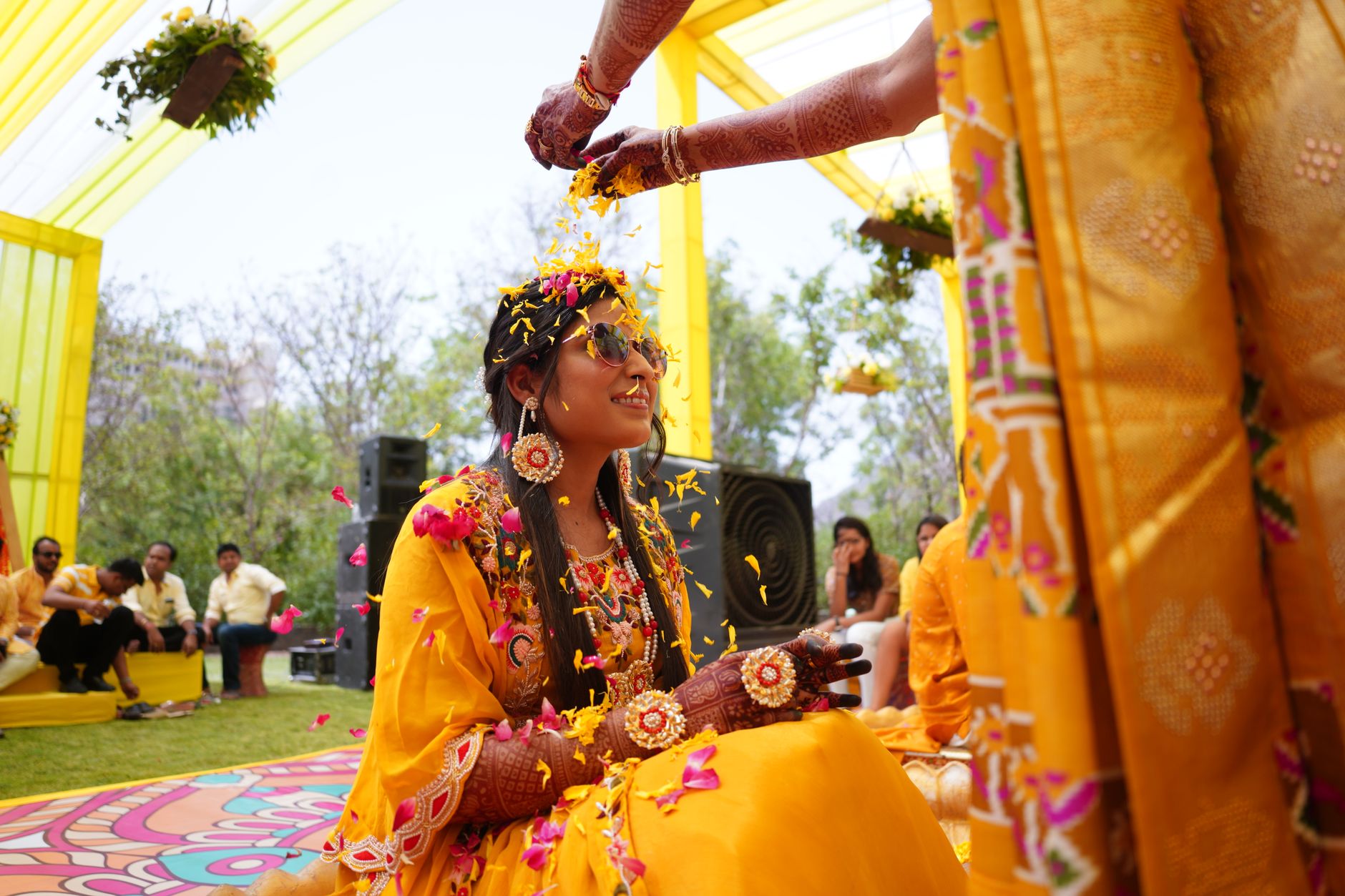
How Much Does an Indian Wedding Cost in Canada? (Mehndi to Reception)
Sep 18, 202617 min read
Create Your Wedding Registry on GetJoyBox
GetJoyBox lets Canadian couples build one registry from any store. Share a single link — no store limits, no fees. Free forever.
Start Your Wedding RegistryHave an idea? See what's new?
GetJoyBox is a passion project that grows with your feedback. Leave a feature idea or check the latest updates.