
A 120-item registry checklist is not a shopping guide — it's a stress test. If you're parenting in a Toronto condo or Vancouver apartment, or simply want a calmer start to family life, a minimalist registry is a smarter move. Fewer items means less clutter, less wasted money, and more headspace for what actually matters. This guide shows you how to build one that's intentional, beautiful, and Canadian.
Posts in This Series
Why Less Really Is More
When you bring a newborn home, the chaos is real — sleep deprivation, a dissolved routine, and a house that's suddenly full of stuff you're tripping over at 3 a.m. A minimalist registry cuts that noise. You buy fewer things, but better ones: durable, versatile, and built to survive Canadian winters and resell well when you're done.
The payoff goes beyond tidiness. Research suggests that simpler environments support infant sleep and reduce parental stress. A nursery with a handful of intentional pieces — rather than a wall of primary-coloured plastic — is calmer for both of you. Health Canada's safe-sleep guidance reinforces this: a clear, uncluttered sleep space isn't just aesthetic, it's safer.
Getting ready for baby? Build your free Canadian registry in minutes — add items from any store. Create your free baby registry →
The 120-Item Myth: What Actually Gets Used
Large retailers pad registry checklists because it sells product — not because you need all of it. Experienced parents consistently report that bottle warmers, wipe warmers, and dedicated baby-food makers get used a handful of times before they take up shelf space permanently. The problem isn't just cost; it's that babies are unpredictable. A swing that soothes one newborn completely overwhelms another.
A curated list of tried-and-true essentials serves you far better than a pre-set mega-list. You save money, reclaim storage, and avoid the guilt of a closet full of barely-touched gear. For a field-tested shortlist, see Minimalist Baby Registry: 43 Items That Actually Get Used. And if you're building out a broader checklist alongside it, 11 Baby Registry Mistakes Canadians Make (And How to Avoid Them) is worth a read before you start.
First-Year Essentials: Needs vs. Wants
Your newborn's non-negotiables are straightforward: a safe sleep space meeting Health Canada standards, a Transport Canada-certified car seat, clothing, feeding supplies, and diapering essentials. Everything else is worth evaluating against one question — does this work across multiple stages, or does it serve one narrow window?
Convertible car seats are the classic example: one seat carries your child from infant through booster years, eliminating a separate infant-seat purchase. An ergonomic carrier replaces a bulky stroller for grocery runs and city sidewalks. For toys, a few open-ended wooden blocks or a soft sensory book outlast a shelf of single-function plastic toys in both durability and developmental value. Our Car Seat Registry Guide walks through Transport Canada certification requirements so you can register with confidence.
Nursery Aesthetics: Calm Over Clutter
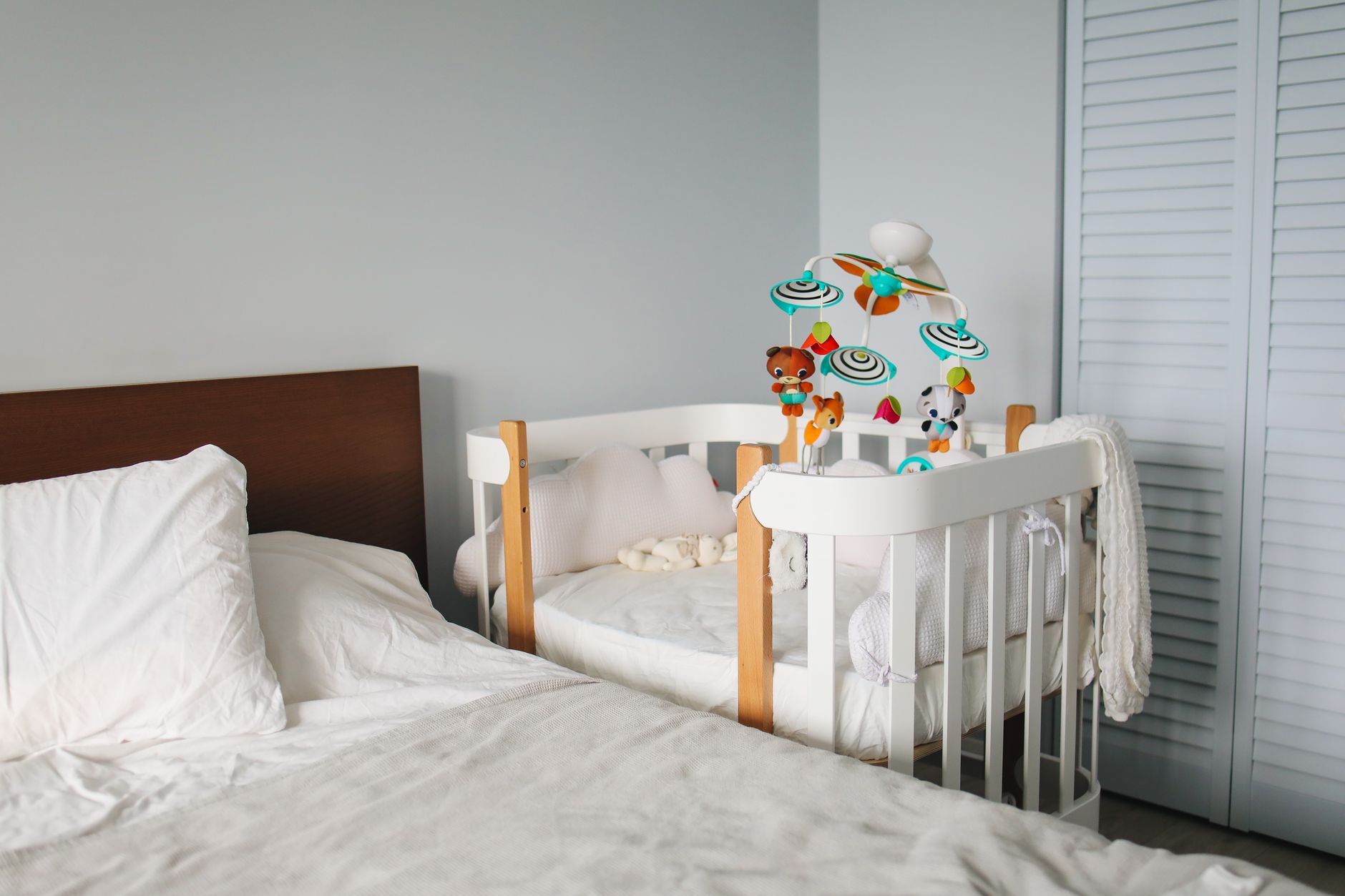
A minimalist nursery isn't sparse — it's intentional. Neutral palettes, natural materials (wood, linen, organic cotton), and functional pieces that double as décor create a room that grows with your child rather than getting swapped out at 18 months. A well-crafted wooden crib, a woven storage basket, and a comfortable glider in a timeless fabric are all you need to make the space feel considered.
For Canadian urban homes where square footage costs a premium, this isn't just aesthetic — it's practical. Every piece should earn its floor space. See the Complete Baby Registry Checklist for Canadian Parents — 2026 for a room-by-room breakdown you can pare down to your own priorities.
The Montessori Angle: Simplicity Supports Development
Montessori principles map naturally onto a minimalist registry. The core idea: a prepared, uncluttered environment supports your baby's independence and natural curiosity better than passive, light-up entertainment. In practice, that means choosing open-ended items — wooden stacking rings, fabric activity books, simple puzzles — over single-function electronic toys.
A low floor bed (instead of a traditional crib) lets a mobile infant explore safely and independently. A small child-sized table and chair supports self-directed eating and play. Simple, accessible storage lets your toddler choose and return their own toys — building autonomy without adding clutter. These aren't niche products; Snuggle Bugz, Indigo, and Well.ca all carry Montessori-aligned options at accessible Canadian price points.
Sensory Play Without the Plastic Pile
Sensory play is genuinely important for infant development — but it doesn't require a dedicated toy room. A high-contrast fabric book, a wooden rattle, a soft textured ball, and supervised water play cover the major sensory bases (visual, auditory, tactile) without overwhelming your space.
For Canadian winters when outdoor stimulation is limited, a simple indoor sensory bin — dried pasta or lentils in a shallow container, under supervision — offers rich tactile exploration at near-zero cost. The pattern here is consistent: natural materials, open-ended use, and a small rotating selection outperform a static pile of toys your baby ignores after day three.
Canadian Practicalities: Winter, Space, and Safety
A minimalist registry still has to work in Canada, and that means accounting for winter. A high-quality snowsuit and warm boots aren't luxuries here — they're gear you'll use for months every year, often across two or three children. Prioritise durability and size range over price when registering outerwear.
Urban space constraints make multi-functional gear non-negotiable. Compact, city-friendly strollers (the UPPAbaby Minu or Bugaboo Butterfly, both available at The Bay and Snuggle Bugz, run roughly $600–$900 CAD) fold small and handle transit. For safety compliance, Transport Canada's child car seat rules are the authoritative source — check them before you register any seat. Start your registry at GetJoyBox and add notes specifying Canadian sizing or seasonal needs so guests buy the right thing.
| Item | Price Range (CAD) | Where to Buy |
|---|---|---|
| Convertible car seat | $300–$600 | Snuggle Bugz, The Bay |
| Compact city stroller | $600–$900 | The Bay, Snuggle Bugz |
| Ergonomic carrier | $120–$200 | Well.ca, Amazon.ca |
| Wooden crib | $300–$700 | Indigo, The Bay |
| Quality snowsuit | $80–$150 | Well.ca, Amazon.ca |
Communicating Your Registry to Guests
The trickiest part of a minimalist registry is managing the expectations of guests who expect 80-item lists. Frame it as curation, not scarcity: you've done the research, chosen the best version of each essential, and made their decision easier. Most people are relieved to have clear direction.
On GetJoyBox, you can add notes to each item explaining your choice — "We're in a one-bedroom condo, so we've picked a carrier over a second stroller" lands better than a bare product listing. Group larger items as shared gifts so multiple guests can contribute toward one meaningful purchase like a crib or stroller. See Baby Registry Etiquette in Canada: What's Normal, What's Not, and What to Do for scripts and guidance on navigating this conversation gracefully.
Quality Over Quantity: The Long-Term Case
The math on quality items is straightforward: a $180 Organic Cotton Halo SleepSack outlasts three $40 alternatives and passes to your next child. A well-made wooden toy from a brand like PlanToys (available on Amazon.ca and Well.ca) holds up through years of use and resells; a cheap plastic equivalent ends up in landfill by month six.
For Canadian parents, durability has an extra dimension — gear needs to survive temperature extremes, wet boots, and active outdoor lifestyles. Neutral, timeless pieces also mean you're not redecorating or re-registering for a second child. The upfront cost is higher; the lifetime cost is lower. That's the minimalist case in a single sentence. For a deeper dive into building this list, the Second Trimester Baby Registry Checklist is a practical starting point for timing your additions.
Frequently Asked Questions
What are the absolute must-have newborn essentials for a minimalist Canadian baby?▾
How do I choose gender-neutral nursery items that still feel stylish for my Canadian home?▾
What are some key Montessori-inspired items I can add to my minimalist registry?▾
How can I incorporate sensory play without buying lots of toys?▾
Is it difficult to find minimalist baby products in Canada?▾
How much should I budget for a minimalist registry in Canada?▾
Keep reading

Build Your Baby Registry on GetJoyBox
Canadian families trust GetJoyBox for baby registries that work with any store—Amazon.ca, Snuggle Bugz, Well.ca, or anywhere you shop. Free to create, free to share.
Start Your Baby RegistryHave an idea? See what's new?
GetJoyBox is a passion project that grows with your feedback. Leave a feature idea or check the latest updates.