
Most baby travel gear under $100 CAD works just as well — often better — than pricier alternatives. You don't need a bespoke travel system for a weekend at grandma's or a flight across the country. A handful of carefully chosen essentials covers nearly every trip, and knowing what to skip is half the battle. This guide shows you exactly where to spend your hundred dollars, what to borrow for free, and how to pack light without leaving anything critical behind.
The Four Problems Baby Travel Gear Actually Needs to Solve
Travel with a baby surfaces four core challenges almost immediately: sleep, containment, sun protection, and feeding on the go. Nail these four and you're genuinely ready for most trips. Everything else is a nice-to-have.
Sleep causes the most anxiety. Babies thrive on routine, and travel disrupts it fast. A portable blackout blind and a white noise app on your phone do far more heavy lifting than any specialized travel bassinet. The goal is dark and familiar, not expensive.
Containment gives you breathing room. A travel crib, a portable playpen, or a gated corner of a room gives your baby a safe spot to explore and gives you a moment to eat with both hands.
Sun protection is non-negotiable on warmer trips. A clip-on stroller shade or a pop-up sun tent prevents burns and keeps your baby comfortable enough to nap outdoors.
Feeding on the go needs practical solutions, not specialty products. A travel highchair strap, a few reusable pouches, and a familiar snack stash handle most scenarios. Health Canada recommends exclusive breastfeeding for the first six months — and CATSA allows breast milk, formula, and baby food through airport security in any quantity, exempt from the 100 ml liquid rule.
Before you add anything to your cart, check it against these four categories. If it doesn't directly solve one of them, it probably doesn't make the cut.
Getting ready for baby? Build your free Canadian registry in minutes — add items from any store. Create your free baby registry →
The $100 Essential Travel Kit: A Practical Breakdown
Here's how to build a foundational travel kit for under $100 CAD, prioritizing versatile items that work across trip types and climates. Add this to your Complete Baby Registry Checklist for Canadian Parents — 2026 so guests can chip in before the baby arrives.
Baby carrier — $25–$50. Your single most valuable travel item. A soft-structured carrier keeps your hands free for luggage, airports, and soothing a fussy baby in a crowd. Ergobaby and Lillebaby are popular Canadian picks, but structured carriers on Amazon.ca regularly land at $30–$40 and hold up well.
Travel blackout blind — $20–$30. A portable suction-cup blind recreates your baby's familiar dark bedroom without any fuss. The Tommee Tippee Grobag Anywhere Blackout Blind runs $25–$30 CAD on Amazon.ca or Well.ca and folds into a tiny pouch.
Large muslin swaddles (2–3 pack) — $15–$20. Use them as a nursing cover, stroller blanket, makeshift changing mat, sun shade, or cleanup cloth. A 3-pack from Amazon.ca or Well.ca lands squarely in this range.
Travel highchair strap — $20–$30. This fabric harness converts almost any restaurant chair into a safe seat. The Munchkin Travel Booster and the Totseat are both available at The Bay or Amazon.ca. It weighs almost nothing and packs flat.
Compact diaper pouch and changing pad — under $20. Ditch the full-size bag for a slim pouch: 4–5 diapers, travel wipes, and a foldable changing pad tucked into your own backpack. Well.ca and Amazon.ca carry flat-folding kits under $20.
Start with the carrier and the blackout blind — they solve the biggest pain points and cost under $80 combined. If you already own a carrier, you're well inside $60.
| Item | Price (CAD) | Where to Buy |
|---|---|---|
| Baby carrier | $25–$50 | Amazon.ca, Snuggle Bugz |
| Travel blackout blind | $20–$30 | Amazon.ca, Well.ca |
| Muslin swaddles (3-pack) | $15–$20 | Amazon.ca, Well.ca |
| Travel highchair strap | $20–$30 | The Bay, Amazon.ca |
| Compact changing pad/pouch | Under $20 | Well.ca, Amazon.ca |


aden + anais Classic Muslin Swaddle Blankets 4-Pack (47"x47")
CAaden + anais
Budget pickWarm Climate Essentials: Sun Protection Under $100
A warm-weather trip shifts your focus to sun protection and airflow. You can cover the extras for $50–$60 on top of your core kit.
Pop-up sun tent — $40–$55. A UPF 50+ tent with mesh ventilation gives your baby a shaded, contained space to nap or play on a beach or in a backyard. Many fold into a carry bag no bigger than a large frisbee. Check Amazon.ca for iPlay/iLearn or Summer Infant options.
Mineral sunscreen — $15–$20. Health Canada–approved mineral formulas with zinc oxide or titanium dioxide sit on top of the skin rather than absorbing into it. Attitude Baby and Thinkbaby are both available at Well.ca and Snuggle Bugz for $15–$18. Reapply every two hours and after water exposure.
Reusable swim diapers (2-pack) — $20–$25. More economical than disposables and gentler on sensitive skin. Bambino Mio and Charlie Banana sell 2-packs at Amazon.ca and Well.ca in this range.
The pop-up tent and mineral sunscreen are your warm-weather non-negotiables. If budget is tight, borrow the tent from a friend and put your dollars into sunscreen and swim diapers. For car seat safety guidance specific to warm-weather road trips, see Transport Canada's child car seat rules.
Cold Climate Essentials: Warm and Safe Under $100
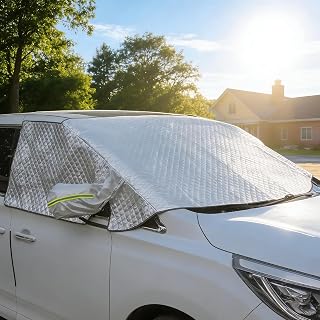
Canadian winters demand a specific approach — and the stakes go beyond comfort. The right gear keeps your baby warm *and* safe in the car seat, which aren't always the same thing.
Car seat poncho — $35–$55. This is the most important cold-weather purchase on this list. Bulky snowsuits compress in a crash and create dangerous slack in the harness — Transport Canada advises against thick clothing under car seat straps for exactly this reason. A poncho goes *over* the buckled harness, keeping your baby warm without compromising fit. Kudo Kids and JJ Cole both make excellent options at Snuggle Bugz and Amazon.ca. The Canadian Paediatric Society recommends rear-facing until children outgrow the seat's weight limits (typically 18–22 kg), so this item stays relevant for years.
Fleece bunting or zip-up jacket — $20–$40. A mid-weight fleece works under the poncho and as a standalone layer indoors. Columbia, MEC's house brand, and The Bay's sale rack all offer quality options at $25–$35 that outlast multiple seasons.
Merino wool hat and mitt set — $25–$35. Merino is warm even when damp, dries fast, and doesn't trap odours. MEC stocks several merino baby accessories, and Canadian brands like Reiff and Engel carry baby-sized options in this range.
Call your hotel before you pack. Most Canadian hotels offer portable cribs or Pack 'n Plays at no charge. Confirming availability before arrival means you're not lugging one through a winter airport or paying to check an extra bag.
Buy the car seat poncho first — it's both a safety item and a warmth item, and there's no budget workaround for it. For more on safe car seat installation, see our Car Seat Registry Guide.


The 'Gear' That Isn't Gear: Smarter Packing Habits
The most effective baby travel strategy is often a mindset shift, not a shopping trip. Strategic packing and using available resources can dramatically reduce what you carry.
Pack for versatility, not every scenario. Choose items that pull double duty. Your muslin swaddles become a stroller shade, a nursing cover, a changing pad, and a blanket. Three mix-and-match outfits beat six single-use ones every time. Every item you cut is one fewer thing to wrangle at the airport.
Lean hard on hotel amenities. Most hotels offer complimentary cribs or Pack 'n Plays, highchairs in the dining area, extra blankets, and sometimes even baby bath supplies. Call the front desk or email reservations *before* you arrive — they need advance notice, and you need a confirmed answer.
Borrow at your destination. If you're visiting family or friends, ask what they have. A spare bassinet, a play mat, a stack of diapers — most people with older kids are happy to lend these out. For longer trips, buying a few basics locally (diapers, wipes, formula) can cost less than airline overweight fees.
Before you buy anything, ask two questions: "Do I already own something that does this?" and "Can I borrow it at my destination?" You'll be surprised how often the answer to both is yes.
aden + anais Classic Muslin Swaddle Blankets 4-Pack (47"x47")
CAaden + anais
Budget pickFree Alternatives: What Hotels and Grandparents Provide
Some of the best baby travel gear costs you nothing — you just have to ask.
Hotels offer more than you think. Portable cribs are a standard amenity at most Canadian hotels, typically free of charge. Reserve one when you book — quantities are limited, but most front desks are accustomed to the request. Many properties also offer highchairs in the restaurant, extra towels, and a small fridge for breast milk or formula storage.
Grandparents and close family are your best resource. A quick message asking about a spare bassinet, a bouncy seat, or a pack of diapers can save you a meaningful purchase and a checked bag. Most people are genuinely delighted to put old gear back to use — and it's worth asking before you click "add to cart" on anything.
Local parent networks fill the gaps. For extended trips to a specific city, post in a local Facebook parenting group or a neighbourhood app like Nextdoor. Borrowing a travel stroller or bouncer for a week is more common than you'd think, and often free or a small token payment — especially when the alternative is paying oversize baggage fees.
Two weeks before your trip, call the hotel and message your family. Those two conversations alone might eliminate several items from your packing list.
What Nobody Tells You About Baby Travel Gear
A few truths about baby travel that rarely make it into product roundups.
Over-packing creates over-stress. First-time parents often pack for every conceivable scenario and arrive at the airport immediately regretting items that aren't pulling their weight. Focus on the core four: feeding, sleeping, safety, and containment. If an item doesn't serve one of those, leave it behind.
"Travel-specific" products are often just smaller versions of things you own. A travel highchair is a fabric strap. A travel crib is a folding crib. A travel bottle warmer is a thermos of hot water. Before you click "add to cart" on any travel-specific product, ask whether something simpler already in your home does the same job. Our Minimalist Baby Registry applies the same logic to your full gear list.
Weight adds up fast on Canadian domestic trips. Air Canada and WestJet both allow lap infants to fly domestically at no charge, but checked baggage fees apply to every bag. For international flights, both airlines charge $25–$150 CAD for a lap infant depending on destination — factor that into your travel budget. Lighter is better in almost every scenario.
Your baby is more adaptable than you expect. Routine matters, but your presence and calm matter more. A relaxed parent compensates for minor gear inconveniences better than any gadget can. Pack what solves real problems, and trust that your baby will handle the rest.
Cut one item from your planned packing list right now. Chances are strong you won't miss it.
Common Packing Mistakes to Avoid
A few predictable mistakes turn manageable trips into exhausting ones. Knowing them ahead of time keeps your bag lighter and your stress lower.
Buying situation-specific gear for every trip type. One item for plane travel, another for car trips, a third for beach days — this burns your budget fast. Prioritize items that work across multiple scenarios. A baby carrier is useful at the airport, on a city walk, and at a crowded family gathering. If you're still building your gear list, check 11 Baby Registry Mistakes Canadians Make before you start your registry.
Overlooking muslin swaddles. A 2–3 pack weighs almost nothing and solves dozens of small travel problems — nursing cover, burp cloth, light blanket, makeshift changing pad, stroller sun shade. At $15–$20 from Amazon.ca or Well.ca, they're the most underrated item on any packing list.
Forgetting to ask about hotel amenities or family hand-me-downs. Many parents default to buying new travel-specific products when a quick call to the hotel or a message to a grandparent would eliminate the need entirely. It's one of the highest-impact, zero-cost strategies available — and it consistently gets skipped.
Packing a full-size diaper bag instead of a compact kit. A large diaper bag is unwieldy in airports and restaurants. Build a slim kit inside your existing backpack: 4–5 diapers, travel wipes, a foldable changing pad, and one change of clothes in a dedicated pouch. Well.ca and Amazon.ca both carry flat-folding changing kits under $20 that slip into any bag.
Do a final bag audit the night before your trip. For every item, ask: "Will I definitely use this, or am I packing it just in case?" Anything in the second category stays home.
aden + anais Classic Muslin Swaddle Blankets 4-Pack (47"x47")
CAaden + anais
Budget pickFrequently Asked Questions
Can I really get a quality baby travel kit for under $100 CAD?▾
What are the most crucial items for baby sleep while traveling?▾
How does Canadian winter weather affect baby travel gear choices?▾
Are there specific Canadian regulations I need to be aware of for baby travel gear?▾
How can I save money by not buying travel-specific gear?▾
What if my baby has specific needs, like allergies or sensitive skin, when traveling?▾
How do I organize my diaper bag for travel effectively on a budget?▾
Keep reading


Build Your Baby Registry on GetJoyBox
Canadian families trust GetJoyBox for baby registries that work with any store — Amazon.ca, Snuggle Bugz, Well.ca, or anywhere you shop. Free to create, free to share.
Start Your Baby RegistryHave an idea? See what's new?
GetJoyBox is a passion project that grows with your feedback. Leave a feature idea or check the latest updates.