
You don't need a 10×12 dedicated room to create a safe, functional nursery. Whether you're working with an 8×10 corner of a second bedroom or a zoned section of an open-concept condo in Vancouver, Toronto, or Montreal, the right furniture choices and layout strategy make all the difference. This guide cuts straight to what works — prioritizing Health Canada–compliant essentials, smart multi-functional pieces, and layouts that breathe.
The Non-Negotiable Essentials: What Must Fit
Every item in a small nursery earns its place. Start with three things: a safe sleep surface, a changing area, and a feeding spot. That's your foundation.
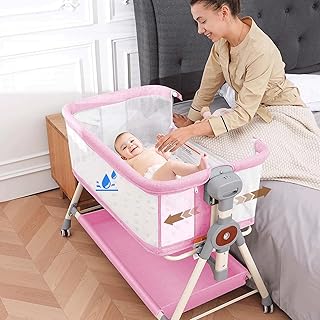
For sleep, a bassinet is the smart first choice — compact, portable, and right beside your bed for those 2 a.m. feeds. When you transition to a crib, choose a mini-crib: they run 10–15 cm narrower than standard models and are genuine space-savers. Graco and Delta Children both offer Health Canada–compliant options widely available on Amazon.ca.
Skip the standalone changing table. A sturdy dresser with a raised, safety-strapped changing pad on top does double duty — diaper station now, clothing storage forever. IKEA Canada sells compatible changing-top attachments for several of their dresser lines.
For feeding, you need good lumbar support, not a massive glider. A slim upholstered armchair works well and won't swallow the room. See Health Canada's safe-sleep guidance for current crib and bassinet standards before you buy.


Getting ready for baby? Build your free Canadian registry in minutes — add items from any store. Create your free baby registry →
Smart Storage: Where Does It All Go?
Babies arrive with a staggering volume of stuff — diapers, wipes, onesies, sleep sacks, creams, burp cloths. Vertical storage is how you keep it from taking over.
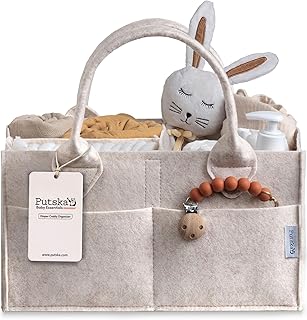
Mount narrow floating shelves above the changing station for diapers, wipes, and lotions — all within arm's reach, zero floor space used. Clear-pocket over-the-door organizers (yes, the kind sold as shoe organizers) are underrated nursery heroes: they hold small outfits, pacifiers, and creams neatly out of sight.
Choose furniture with built-in storage wherever possible. A storage ottoman doubles as a footrest during feeds and hides extra blankets. Cribs with under-drawer storage are worth prioritizing — that drawer quietly absorbs a season's worth of bedding. Amazon.ca's dimension filters make it easy to compare storage pieces by size, which matters when every centimetre counts. For more on avoiding common purchasing errors, see 11 Baby Registry Mistakes Canadians Make (And How to Avoid Them).


Burt's Bees Baby 3-Pack Waterproof Fitted Changing Pad Liners
CABurt's Bees Baby
Budget pickFurniture That Grows With Your Baby
Multi-functional furniture is the single best investment in a small space — it reduces total piece count and defers future purchases.
A convertible crib transitions from newborn to toddler bed to daybed, sometimes all the way to a full-size frame. Storkcraft and HALO both offer well-reviewed convertible options available across Canada. One piece, many years.
The dresser-as-changing-station deserves a second mention here: once your child is out of diapers, the pad comes off and you have a perfectly functional dresser for the next stage. IKEA Canada's HEMNES series is a go-to for this — affordable, deep-drawered, and adaptable.
For seating, a sleek armchair with clean lines can live in your main living area during the newborn months and migrate to a reading corner as your child grows. Retailers like CB2 and EQ3 carry compact, modern pieces designed to be repurposed rather than replaced. See the Complete Baby Registry Checklist for Canadian Parents — 2026 for a full breakdown of what's worth registering.
| Type | Typical Width | Longevity | Best For |
|---|---|---|---|
| Mini-crib | ~60 cm | Newborn–~2 yrs | Tight rooms, shared spaces |
| Standard crib | ~70 cm | Newborn–~3 yrs | Dedicated small rooms |
| Convertible crib | ~70 cm | Newborn–school age | Long-term value, any size room |

Layout Patterns for Tiny Rooms
Think in zones. In an 8×10 space, push the crib or mini-crib against the longest wall, position the feeding chair directly adjacent, and place the dresser/changing station on a perpendicular wall. This creates a natural loop — sleep to change to feed — without awkward crossings at 4 a.m.
For rectangular rooms, the L-shape layout works well: crib on one wall, dresser on the adjoining wall, centre floor kept clear. Square rooms benefit from a more centred crib with other furniture hugging the perimeter.
Scale matters more than style. A mini-crib keeps an 8×10 room breathable; an oversized armchair kills it. Always trace your path from door → crib → changing station → feeding chair — that route should be clear and navigable in the dark. A pack-n-play that folds flat is useful when you need flexible floor space during the day. For a broader planning framework, see the Second Trimester Baby Registry Checklist: When to Start and What to Add.


What You Can Absolutely Skip
A standalone wardrobe or armoire is almost always redundant. Babies don't need a vast wardrobe rotation — you'll do laundry constantly — and a dresser plus vertical closet organizers handles clothing storage without eating floor space.
A dedicated nursery glider is a luxury most small-space parents can skip. A comfortable armchair already in your living area serves the same purpose and is more accessible during daytime feeds.
Separate changing tables and large static playpens are the other common space-wasters. A dresser topper replaces the changing table outright. For floor play, a roll-up play mat stores flat under the crib and costs a fraction of a dedicated playpen. The rule: every piece must serve at least two purposes or justify its footprint with daily use. Anything else belongs on a 'maybe later' list, not your baby registry.

Delta Children Emerson Upholstered Glider Swivel Rocker Chair
CADelta Children
PremiumHealth Canada Safe Sleep Setup
Space constraints never justify safety shortcuts. Health Canada's safe-sleep rules are non-negotiable regardless of room size.
Always place your baby on their back on a firm, flat surface — no soft bedding, pillows, bumper pads, or stuffed animals in the sleep space. The crib or bassinet must carry current Canadian safety certification, which will be clearly marked on the product. Check that the mattress fits snugly: no more than two finger-widths of gap between the mattress edge and the crib sides.
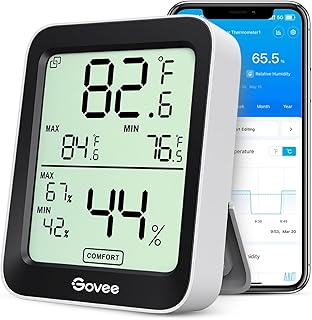
Remove mobiles once your baby can push up on hands and knees — they become a strangulation risk. Keep the room at a comfortable temperature and dress your baby in a sleep sack rather than loose blankets. HALO SleepSacks come in 0.5, 1.0, and 2.5 TOG ratings to suit every Canadian season and are available at Snuggle Bugz, Well.ca, and Amazon.ca. Review the full standards at Health Canada's safe-sleep page before finalizing your sleep setup.


Canadian Retailers for Small-Space Solutions
IKEA Canada is the starting point for most small-nursery builds. The SNIGLAR and SUNDVIK cribs are compact and affordable; HEMNES and MALM dressers adapt easily with changing-top attachments; and their wall-shelf systems maximize vertical space without bulk. The minimalist aesthetic keeps small rooms from feeling visually cluttered.
Amazon.ca is invaluable for its size-filter search — you can shop mini-cribs and bassinets by exact dimensions, then cross-reference real reviews from Canadian parents navigating the same space constraints. Snuggle Bugz and Well.ca are strong for sleep sacks, mattress protectors, and feeding accessories, with Canadian-specific product curation and straightforward returns.
For investment pieces you'll repurpose as your child grows — a slim armchair, a modular shelving unit — CB2 and EQ3 offer clean-lined designs worth the higher price point. Always measure your space before ordering and confirm that any crib or sleep product carries Canadian safety certification.
| Retailer | Best For | Price Range |
|---|---|---|
| IKEA Canada | Cribs, dressers, shelving | $ |
| Amazon.ca | Bassinets, mini-cribs, organizers | $–$$ |
| Snuggle Bugz / Well.ca | Sleep sacks, mattress protectors, feeding | $$ |
| CB2 / EQ3 | Repurposable seating & shelving | $$$ |
Delta Children Emerson Upholstered Glider Swivel Rocker Chair
CADelta Children
PremiumWhat Nobody Tells You About Small-Space Nurseries
Stuff creep is real. Even with careful planning, a small nursery fills up fast. Build a decluttering habit from week one — regularly assess what you're actually using and rotate or donate the rest. This isn't aspirational advice; it's survival.
Noise is the other surprise. In an open-concept condo, your nursery zone won't be acoustically isolated from the living area. A white noise machine masks ambient sound and creates a consistent sleep cue for your baby. The Hatch Rest and LectroFan are both popular with Canadian parents and available on Amazon.ca.
Finally, a small space can weigh on you psychologically. Counter it intentionally: soft neutral walls, clear surfaces, one piece of art you love, a small plant. You'll spend hundreds of hours in this room — make it somewhere you actually want to be, not just somewhere that functions. For a broader look at what to prioritize across the whole registry, see the Minimalist Baby Registry: 43 Items That Actually Get Used.


Common Mistakes to Avoid
Over-purchasing before baby arrives is the most expensive mistake. Social media and in-store displays make everything look essential — most of it isn't. Audit each item against one question: does this replace something I'd otherwise need, or does it serve only one purpose for a short window? If the answer is the latter, skip it or add it to a post-arrival wish list.
Ignoring vertical space is the second most common error. When all storage sits at floor level, the room feels chaotic fast. Wall-mounted shelves, hanging organizers, and pegboards reclaim the height of the room and keep the floor clear — which is where your baby will eventually play.
Never compromise safety for aesthetics. All furniture must meet Health Canada standards; ensure certification labels are present on anything that touches your baby's sleep space. A functional, secure nursery always outranks a perfectly curated one. See the Car Seat Registry Guide: What to Register For and Transport Canada Rules for an example of how Canadian safety standards shape smart registry decisions.
Delta Children Emerson Upholstered Glider Swivel Rocker Chair
CADelta Children
PremiumThe Canadian Difference: Registry and Regulations
Health Canada sets the standards that matter most: safe sleep surfaces, crib construction, product recalls, and car seat installation. Before registering any big-ticket item — crib, stroller, car seat — confirm it carries current Canadian safety certification. Check Health Canada's product safety recalls periodically, especially for second-hand items.
Building your registry through a Canadian platform like GetJoyBox means your gift-givers are working with Canadian retailers, Canadian pricing, and straightforward local returns. You can mix practical must-haves (a compact crib, diaper supplies) with meaningful personal picks, and guests contribute to specific items rather than guessing. Start your registry early enough to give family and friends time to plan.
For the feeding side of your nursery setup — bottles, nursing supplies, and solid-food gear — the Baby Feeding Registry Guide: Bottles, Formula, and Solid Food Essentials covers what's worth adding and what to skip.
Delta Children Emerson Upholstered Glider Swivel Rocker Chair
CADelta Children
PremiumFrequently Asked Questions
Can I set up a nursery in a small bedroom without closing the door?▾
What are the best compact crib options available in Canada?▾
Do I really need a separate changing table?▾
How can I store baby clothes when I don't have much closet space?▾
What's the best approach to baby furniture for a condo?▾
How do I make a small nursery feel calming and not claustrophobic?▾
Keep reading



Build Your Registry on GetJoyBox
GetJoyBox is the Canadian gift registry built for the way people actually give. Create yours in minutes — free, no credit card required.
Create Your Free RegistryHave an idea? See what's new?
GetJoyBox is a passion project that grows with your feedback. Leave a feature idea or check the latest updates.